In this article
Introduction
- The Challenge Facing Small and Mid-Sized Destinations
- Why Europe Still Matters
- The Resource Gap Facing Smaller DMOs
The Rising Cost of Participation
- The True Cost of European Trade Shows
- Why International Events Stretch Marketing Budgets
- The Hidden Cost: Time
Are Trade Shows Still Worth It?
- Why Face-to-Face Meetings Still Matter
- The Real Question Destinations Should Be Asking
A New Model Is Emerging
- From Overseas Offices to Local Representation
- Why Tourism Is Following Other Industries
- Visibility Without the Full Cost
Why Smaller DMOs Need Alternatives
- The International Growth Opportunity
- The Staffing Reality
- Choosing Between Visibility and Affordability
What Effective Representation Actually Looks Like
- Strategic Event Selection
- Appointment Scheduling
- Professional On-Site Representation
- Market Intelligence
- Follow-Up Reporting
The Future of International Tourism Trade Development
- A Changing Approach to European Markets
- Flexibility and Cost Efficiency
- Building Sustainable International Presence
Final Thoughts
- Is Your Destination Maximizing Its European Investment?
- Rethinking How to Engage with Europe
Related services
• Trade Representation & B2B Growth
• Partnership Development
Let’s talk strategy
“Europe rewards consistency, not occasional appearances. The destinations that succeed are those that combine strategic focus, trusted representation, and a long-term commitment to building relationships.”
— Addendum
Why North American DMOs Are Rethinking How They Participate in European Tourism Trade Shows
May 21, 2026 • 10 min read • By Addendum

Share this article
The Challenge Facing Small and Mid-Sized Destinations
For many Destination Marketing Organizations (DMOs), tourism boards, CVBs, municipalities, and regional tourism organizations across the United States and Canada, international market development remains a priority.
Europe continues to be one of the most important source markets for long-haul travelers. European visitors often stay longer, travel beyond gateway cities, explore multiple regions, and generate significant economic impact for local communities.
Yet for many North American destinations, especially those serving populations under 500,000 residents, maintaining a consistent presence in Europe has become increasingly difficult.
The challenge is not a lack of opportunity.
The challenge is resources.
Today, more destination organizations are beginning to rethink whether sending staff to European tourism trade shows is the most effective use of their budgets.
The Rising Cost of International Trade Show Participation
Attending major European tourism exhibitions such as ITB Berlin, WTM London, IFTM Top Resa, Vakantiebeurs, or specialized B2B tourism workshops requires a significant investment.
A typical trip often includes:
- International flights
- Hotel accommodation
- Meals and local transportation
- Event registration fees
- Staff salaries and travel time
- Meeting preparation and follow-up
For many organizations, a single event can easily exceed $5,000–$10,000 per representative.
Multiply that by several events per year, and the annual cost can quickly become difficult to justify.
For large national tourism organizations, these costs may be manageable.
For smaller DMOs and regional tourism offices, they can represent a substantial portion of the annual marketing budget.
The Hidden Cost: Time
Financial costs tell only part of the story.
Many tourism directors and destination marketing professionals already wear multiple hats.
They manage:
- Marketing campaigns
- Public relations
- Stakeholder relations
- Industry partnerships
- Community engagement
- Reporting and grant administration
Traveling to Europe for a trade show often means spending five to seven days away from the office.
When preparation, travel, participation, and follow-up are included, one exhibition can consume two full weeks of productive work time.
For lean destination teams, this creates a significant operational burden.
Are Trade Shows Still Important?
Absolutely.
In fact, face-to-face meetings remain one of the most effective ways to build relationships with:
- Tour operators
- Travel advisors
- Online travel platforms
- Group travel specialists
- Media representatives
- Airline partners
The question is not whether destinations should participate in European tourism trade events.
The real question is:
How can destinations maintain a strong European presence without absorbing the full cost of international travel?
A New Model Is Emerging
Across many industries, organizations have embraced local market representation as a more efficient alternative to maintaining overseas offices.
Tourism is beginning to follow the same path.
Rather than sending staff to every event, destinations can work with experienced in-market representatives who attend exhibitions and B2B workshops on their behalf.
This model allows destinations to:
- Maintain year-round visibility in Europe
- Attend multiple trade events
- Access local market intelligence
- Meet qualified buyers
- Reduce travel costs significantly
- Scale participation according to budget
Most importantly, destinations remain present in the market even when internal staffing or budgets are limited.
Why This Matters for Smaller DMOs
For destinations serving populations under 500,000 residents, international tourism growth can have an outsized economic impact.
Yet these organizations rarely have the staffing levels of major cities or state tourism offices.
As a result, many smaller destinations face a difficult choice:
Either participate in only one or two international events per year or withdraw from international trade development altogether.
Neither option is ideal.
A representation model offers a third alternative.
Instead of choosing between visibility and affordability, destinations can maintain both.
What Effective Representation Actually Looks Like
Professional tourism representation is much more than standing at a booth.
Effective representation includes:
Strategic Event Selection
Not every exhibition delivers the same value.
The right representative helps identify which events align with your target markets and objectives.
Appointment Scheduling
Successful participation starts long before the event opens.
Meeting schedules are built in advance with relevant buyers, operators, media, and industry stakeholders.
On-Site Representation
Your destination is professionally presented to qualified contacts throughout the event.
Conversations focus on generating meaningful business opportunities rather than simply distributing brochures.
Market Intelligence
Representatives gather valuable insights about:
- Market trends
- Competitor activity
- Buyer interests
- Emerging opportunities
Follow-Up Reporting
After each event, destinations receive detailed reports outlining:
- Meetings conducted
- Contacts generated
- Opportunities identified
- Recommended next steps
The Future of International Tourism Trade Development
European tourism markets continue to offer significant opportunities for North American destinations.
However, the way destinations engage with those markets is evolving.
As budgets become tighter and staffing pressures increase, many tourism organizations are looking for more flexible and cost-effective approaches.
Local representation is no longer simply an alternative.
For many destinations, it is becoming a smarter way to maintain a consistent presence, build valuable relationships, and generate international business without the expense of frequent overseas travel.
Is Your Destination Maximizing Its European Trade Show Investment?
If your organization participates in European tourism trade shows—or would like to but finds the costs difficult to justify—it may be time to explore alternative approaches.
A strategic representation model can help your destination maintain visibility, build partnerships, and access European markets while making better use of your marketing budget.
The question is no longer whether Europe matters.
The question is how to engage with Europe more efficiently.
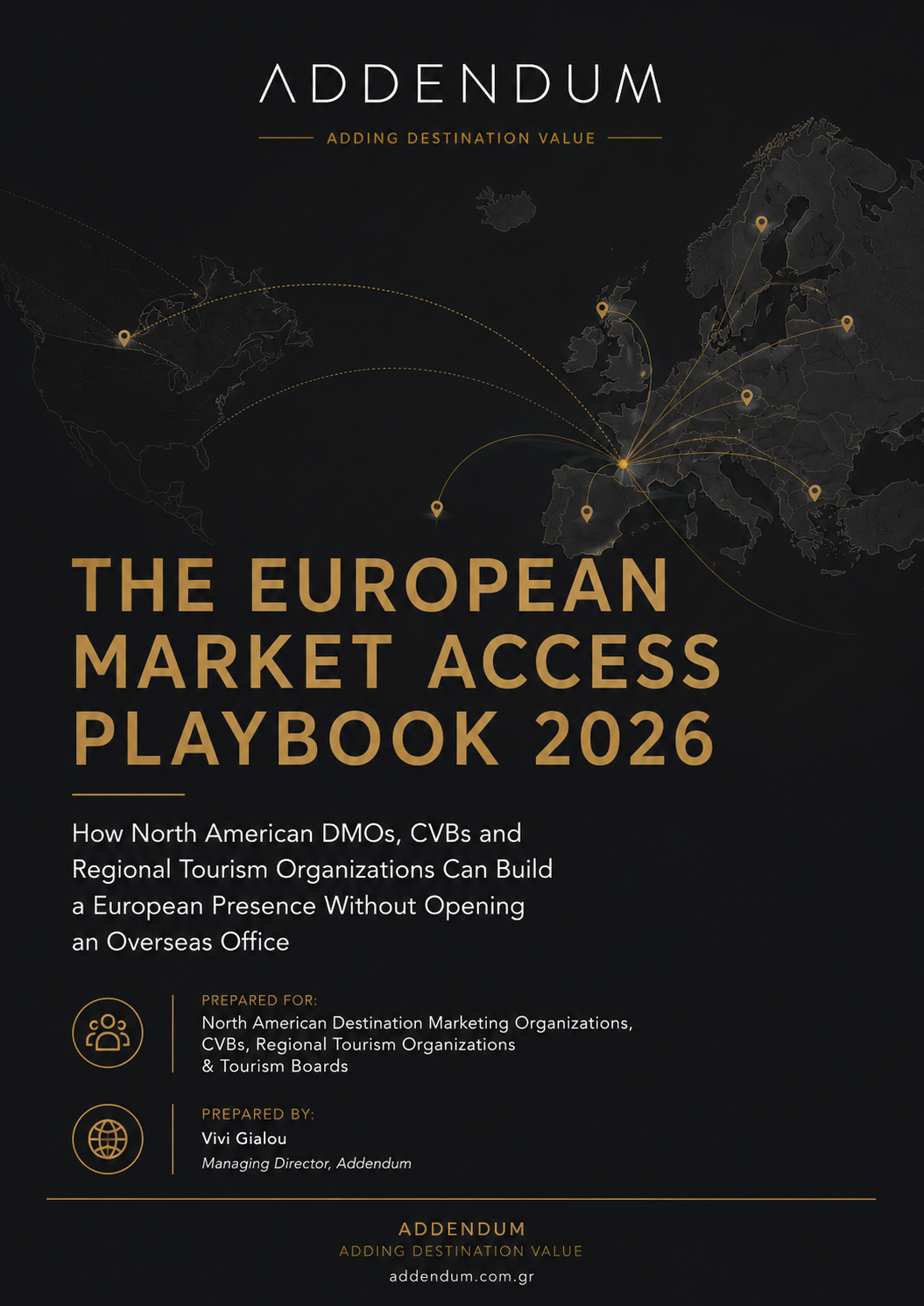
European Market Access Playbook 2026
A practical guide for North American DMOs, CVBs and Tourism Boards seeking a smarter, more cost-effective way to build visibility, relationships and market access across Europe.
- The real cost of attending European tourism trade shows
- Europe’s most important B2B tourism events
- The European representation model
- Practical recommendations for smaller destinations
Request your complimentary copy
Complete the short form and we will review your request before sending the Playbook.