
In this article
LA 2028 Tourism Opportunity
Why California Must Start Now
A Statewide Opportunity
European Traveller Behaviour
Tour Operators Are Already Planning
Preparing for Market Growth
Building a European Strategy
Creating Olympic Extension Itineraries
Year-Round Trade Engagement
Business-Focused FAM Trips
Turning Visibility into Bookings
Partnerships & Legacy
Beyond Los Angeles
California–Olympia Collaboration
Global Olympic Partnerships
Building a Long-Term Tourism Legacy
Why Early Action Matters
For a more compact, executive-style version:
LA 2028 Strategy
Why Preparation Starts Now
California Beyond Los Angeles
The European Visitor Opportunity
Practical Actions
European Market Strategy
Olympic Extension Itineraries
Trade Representation
Buyer Engagement
Business-Focused FAM Trips
Partnerships & Legacy
California–Olympia Partnership
Olympic Values in Destination Branding
International Collaboration
Long-Term Tourism Legacy
Related services
• Trade Representation & B2B Growth
• Partnership Development
Let’s talk strategy
“LA 2028 is more than a sporting event. It is a once-in-a-generation opportunity for California destinations to rethink how they engage international markets, build partnerships and create a lasting tourism legacy.”
— Addendum
Beyond the Olympic Games
Why California Destinations Should Start Preparing for LA 2028 Today
A Strategic Briefing for California DMOs, CVBs and Tourism Organizations
July 16, 2026 • 10 min read • By Addendum
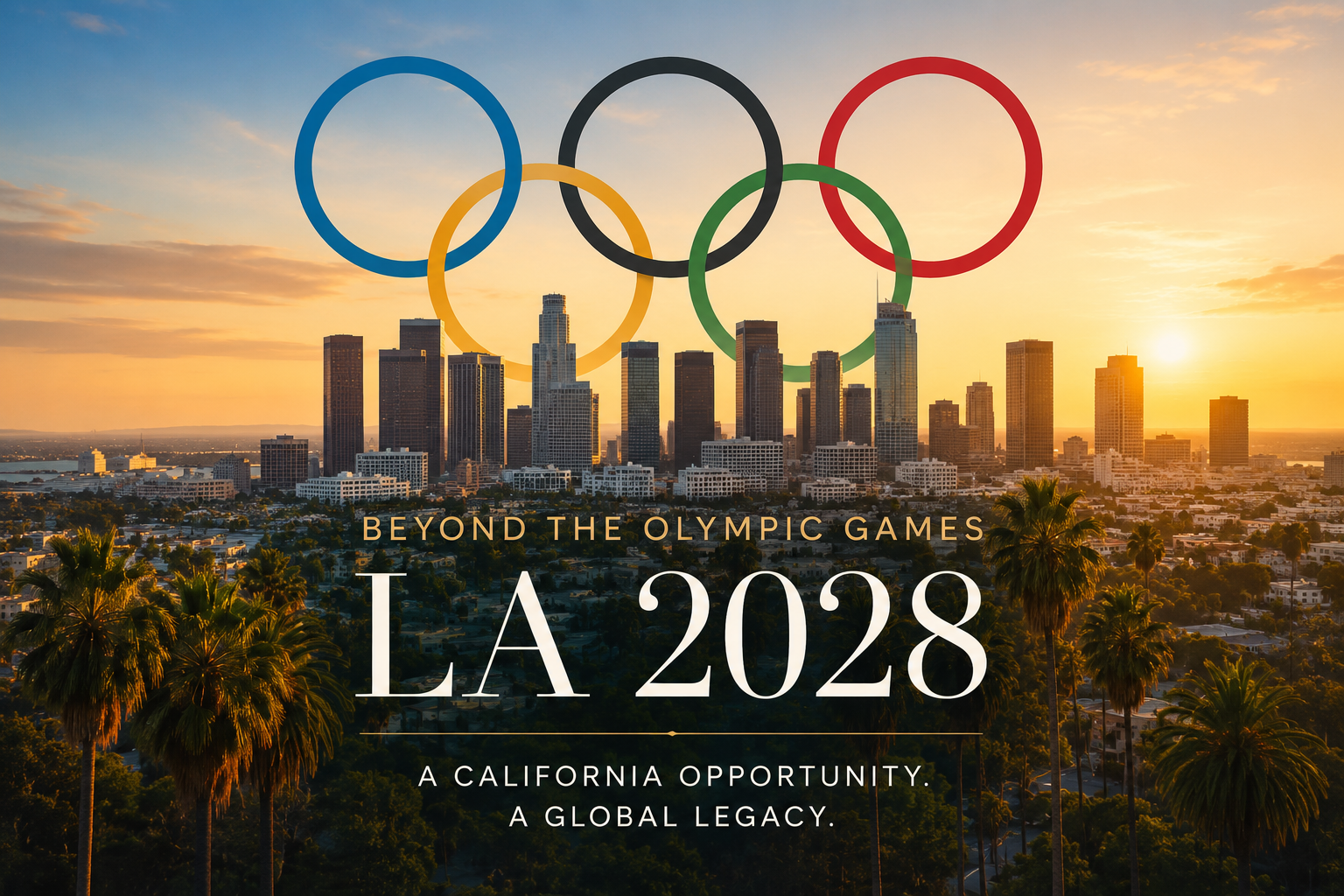
In July 2028, the world’s attention will turn toward Los Angeles.
Billions of viewers will watch the Olympic Games. Hundreds of thousands of international visitors will arrive in California. Global media coverage will reach every corner of the world.
For California, this represents one of the most significant tourism opportunities in decades.
Yet while much of the conversation focuses on the event itself, the greatest commercial opportunity lies elsewhere.
European tour operators are already shaping future itineraries. Travel advisors are identifying new experiences. Airlines are evaluating long-haul demand. International media are searching for stories beyond the host city.
The question is no longer whether LA 2028 will benefit California.
The question is whether California’s destinations will be ready when the opportunity arrives.
History consistently shows that the destinations achieving the greatest long-term returns from global events are rarely those focused solely on the event itself.
They begin preparing years in advance.
They build commercial relationships.
They develop new tourism products.
They educate travel buyers.
They position themselves as essential parts of the visitor journey long before the opening ceremony.
For California destinations, LA 2028 has already begun.
LA 2028 Is a California Opportunity—Not Just a Los Angeles Opportunity
When international audiences think about the Olympic Games, they naturally focus on the host city.
Visitors think differently.
A European traveller flying more than ten hours rarely plans a holiday around one destination alone.
Instead, the Games become the beginning of a much larger journey.
Los Angeles becomes the gateway.
California becomes the experience.
Visitors will extend their stay to discover coastal towns, wine regions, national parks, mountain communities, luxury resorts and cultural destinations throughout the state.
Santa Barbara.
Monterey.
Big Sur.
Paso Robles.
Napa Valley.
Palm Springs.
Yosemite.
Lake Tahoe.
Orange County.
San Diego.
Countless smaller communities that offer the authentic experiences international travellers increasingly seek.
The Olympic Games are not simply a Los Angeles opportunity.
They are California’s opportunity.
European Travellers Think Differently
Understanding the European market is essential for destinations seeking to maximize the opportunities created by LA 2028. Unlike many domestic visitors, Europeans typically travel for two or even three weeks, allowing them to experience multiple destinations during a single trip. Rather than focusing exclusively on iconic cities, they are drawn to road trips, scenic landscapes, national parks, wine regions, coastal communities, outdoor adventures and authentic local culture.
This travel behaviour creates a significant competitive advantage for destinations across California. Communities beyond Los Angeles have the opportunity to become integral parts of longer itineraries, offering visitors a richer and more diverse experience of the state. For many European travellers, California is not a single destination—it is a journey.
The challenge is ensuring that your destination becomes part of the itineraries being designed today, long before visitors begin planning their Olympic journey.
Tour Operators Are Already Planning
Perhaps the biggest misconception surrounding LA 2028 is timing. While many destinations assume that planning will intensify as the Games approach, the international travel industry operates on a very different timeline. Major European tour operators typically begin developing new programmes several years in advance, carefully evaluating destinations, negotiating hotel contracts, designing itineraries, securing transportation and establishing commercial partnerships long before products reach the market.
By the time the Olympic torch is lit in Los Angeles, many of these programmes will already have been designed, priced, contracted and distributed through travel agencies across Europe. Decisions about which destinations to include—and which to leave out—will have been made well before the opening ceremony.
For California destinations, this means the window of opportunity is already open. Waiting until 2028 to engage the European travel trade is likely to mean entering the conversation after many of the most important commercial decisions have already been taken. The destinations that act now will have the opportunity to shape future itineraries rather than compete for the remaining space.
Visibility Alone Will Not Generate Visitors
The global exposure generated by the Olympic Games will undoubtedly place California in front of millions of potential travellers. However, visibility alone does not generate visitor arrivals. Awareness may inspire interest, but commercial relationships are what ultimately convert interest into bookings.
European tour operators cannot confidently sell destinations they know little about. Travel advisors are unlikely to recommend places they have never experienced, and journalists cannot tell compelling stories about destinations they have never discovered. Media attention may open the door, but it is sustained engagement with the travel trade that creates long-term demand.
For this reason, destinations should view LA 2028 not simply as a marketing opportunity, but as a catalyst for strengthening their commercial presence in international markets. Trade shows, year-round representation, sales missions, educational webinars, media engagement, business-focused FAM trips and strategic partnerships all contribute to building familiarity with a destination. That familiarity develops into confidence, and confidence is ultimately what leads tour operators and travel advisors to include a destination in their programmes.
The destinations that benefit most from LA 2028 will not necessarily be those receiving the greatest media exposure. They will be those that transform global attention into long-term commercial relationships capable of generating visitor growth for years after the Olympic flame has been extinguished.
Five Actions Every California Destination Should Take Before 2028
1. Develop a European Market Strategy
Identify priority markets, visitor segments and products before investing in international promotion.
A strategy should guide every commercial decision—not the other way around.
2. Build Long-Term Relationships with European Buyers
Trade relationships require consistency.
Maintain year-round communication through representation, trade events, webinars and market updates.
3. Create Olympic Extension Experiences
Design itineraries that encourage visitors to continue their journey beyond Los Angeles.
Wine regions.
Coastal routes.
Outdoor adventures.
Luxury experiences.
Wellness retreats.
National Parks.
Transform the Games into the beginning—not the end—of the California experience.
4. Maintain a Continuous European Presence
Europe rewards consistency.
Destinations that remain visible throughout the year build stronger commercial relationships than those appearing only during major exhibitions.
5. Invest in Business-Focused FAM Trips
Invite carefully selected buyers whose markets align with your destination.
Every educational visit should have measurable commercial objectives and structured follow-up.
Think Beyond Los Angeles
The Olympic Games may inspire millions of travellers to choose California as their next destination, but what they ultimately remember—and recommend to others—will depend on the journey they experience beyond the competition venues. For many international visitors, Los Angeles will simply be the gateway to a broader exploration of the state. A journey that begins with the Olympic Games may continue along the Pacific Coast Highway, through Big Sur and Monterey, into Yosemite National Park, across the vineyards of Paso Robles and Napa Valley, before concluding in San Diego or another of California’s diverse destinations. At that point, the Olympic Games are no longer the primary attraction; they become the catalyst for discovering California as a whole. Destinations that position themselves within these broader travel experiences have an opportunity to generate long-term economic benefits that extend well beyond the closing ceremony.
Think Beyond California: Build Global Olympic Partnerships
The opportunities created by LA 2028 extend far beyond visitor numbers and international media exposure. They also present a unique opportunity for California to establish meaningful global partnerships that reinforce its long-term tourism positioning and create a lasting Olympic legacy. Among the most compelling possibilities is developing closer collaboration with Olympia, Greece—the birthplace of the Olympic Games.
Rather than viewing such a relationship as a symbolic twinning initiative, California could embrace it as a strategic partnership built around the shared values that have defined the Olympic Movement for more than 2,700 years: excellence, friendship, respect, cultural exchange and peace through sport. Joint tourism initiatives, educational programmes, cultural exchanges, travel trade collaborations and international storytelling could create an authentic narrative that connects the birthplace of the Olympic Games with one of its most anticipated modern editions.
The Games may take place in Los Angeles, but the Olympic story began in Olympia. Connecting these two destinations would create a powerful bridge between ancient heritage and contemporary celebration, offering California a distinctive positioning that no previous Olympic host destination has fully embraced. More importantly, it would demonstrate how international partnerships can transform a global sporting event into a long-term tourism and cultural legacy that benefits both destinations for years to come.
Europe Won’t Wait Until 2028
The opportunity created by LA 2028 is already influencing conversations across the international travel industry.
European tour operators are planning.
Travel advisors are searching for new experiences.
Media are looking beyond Los Angeles.
Destinations that wait until 2028 risk joining the conversation after key commercial decisions have already been made.
Those that begin building relationships today will be better positioned to attract visitors tomorrow.
The Olympic Games will shine a spotlight on California.
The destinations that benefit most will be those that have already prepared to step into it.
Is Your Destination Part of Europe’s LA 2028 Conversation Yet?
European tour operators are already exploring future California itineraries around the Olympic Games. The question is not whether LA 2028 will create new opportunities, but whether your destination will be included in the conversations taking place today.
During a complimentary 30-minute executive session, we can explore:
A confidential strategy conversation for California DMOs, CVBs, tourism boards and regional destination organizations.